Blog
Markdown Components Are Rust Functions
Markdown-generated tags can be replaced with Rust functions so links, images, and other authored content remain customizable without turning markdown into an opaque HTML string step.
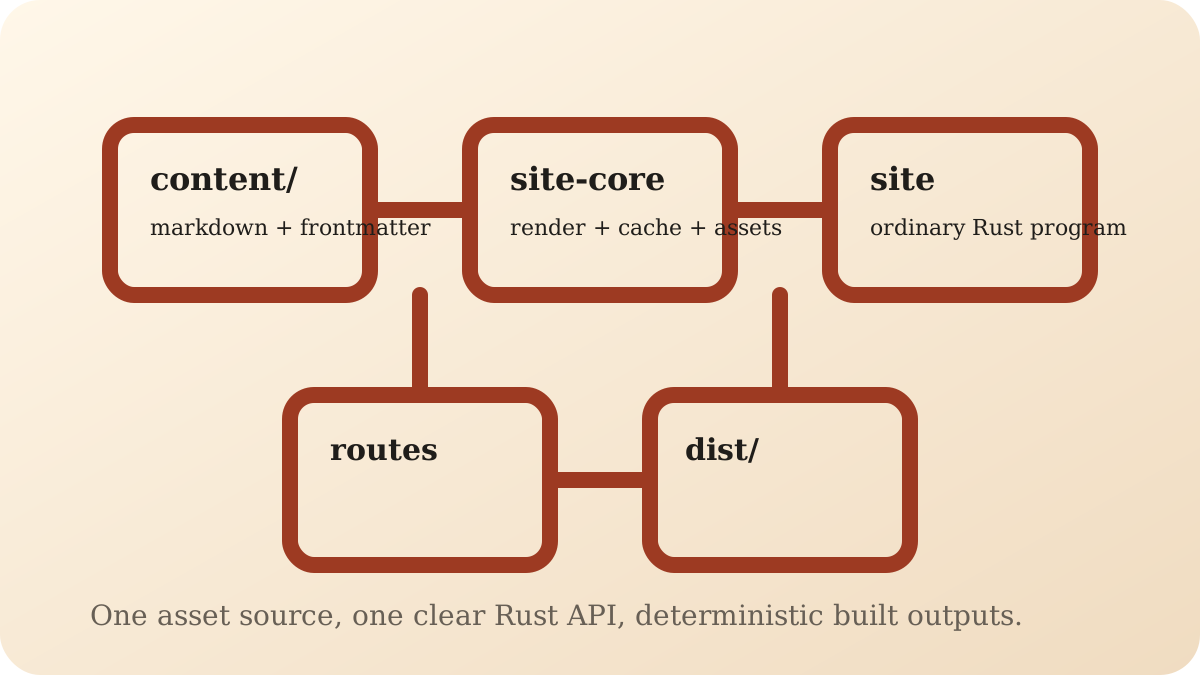
Markdown does not have to be the end of customization
Many static site pipelines treat markdown as a one-way conversion into an HTML string.
That makes customization awkward. The moment you want:
custom links
responsive images
richer code blocks
route-aware components
you end up patching HTML after the fact or introducing a second template layer.
This project takes a different approach.
The public API surface
The relevant API pieces are:
SiteBuilder::markdown_component(...)ComponentPropsComponentProps::attr(...)ComponentProps::asset_url(...)ComponentProps::image_url(...)ComponentProps::responsive_image(...)ComponentProps::probe_image(...)
That gives markdown components a small, Rust-native interface instead of exposing the full markdown AST to ordinary site code.
Markdown-generated tags can be overridden
The site builder can replace one generated HTML tag with a Rust function:
.markdown_component("a", components::smart_link)
.markdown_component("img", components::responsive_image)
The component receives ComponentProps, which includes:
the generated tag name
the generated attributes
the rendered children
helper methods for resolving assets and image outputs
That keeps customization in ordinary Rust instead of in a separate macro or HTML-rewrite step.
Asset-aware components matter most for images
Image tags are where this becomes especially valuable.
A custom img component can:
preserve SVG inputs as vector output by default
request responsive AVIF outputs for raster images
probe the authored source when dimensions matter
And it can do all that through the same asset pipeline used by route handlers.
That means markdown-authored content can still benefit from:
deterministic asset URLs
transform caching
format-agnostic output requests
correct relative-path resolution
Why this is better than post-processing HTML
Post-processing HTML is often too late.
At that point you have already lost the meaningful structure:
which attributes mattered
where local asset resolution should happen
what source document the reference came from
The markdown component hook preserves those decisions at the right layer.
Where to go next
Read Override markdown components for the cookbook-style walkthrough.
Read Work with content images for the image-specific version.
Read Site-building API for the exact API names.